
Verdict: Building a Defensible Security Posture
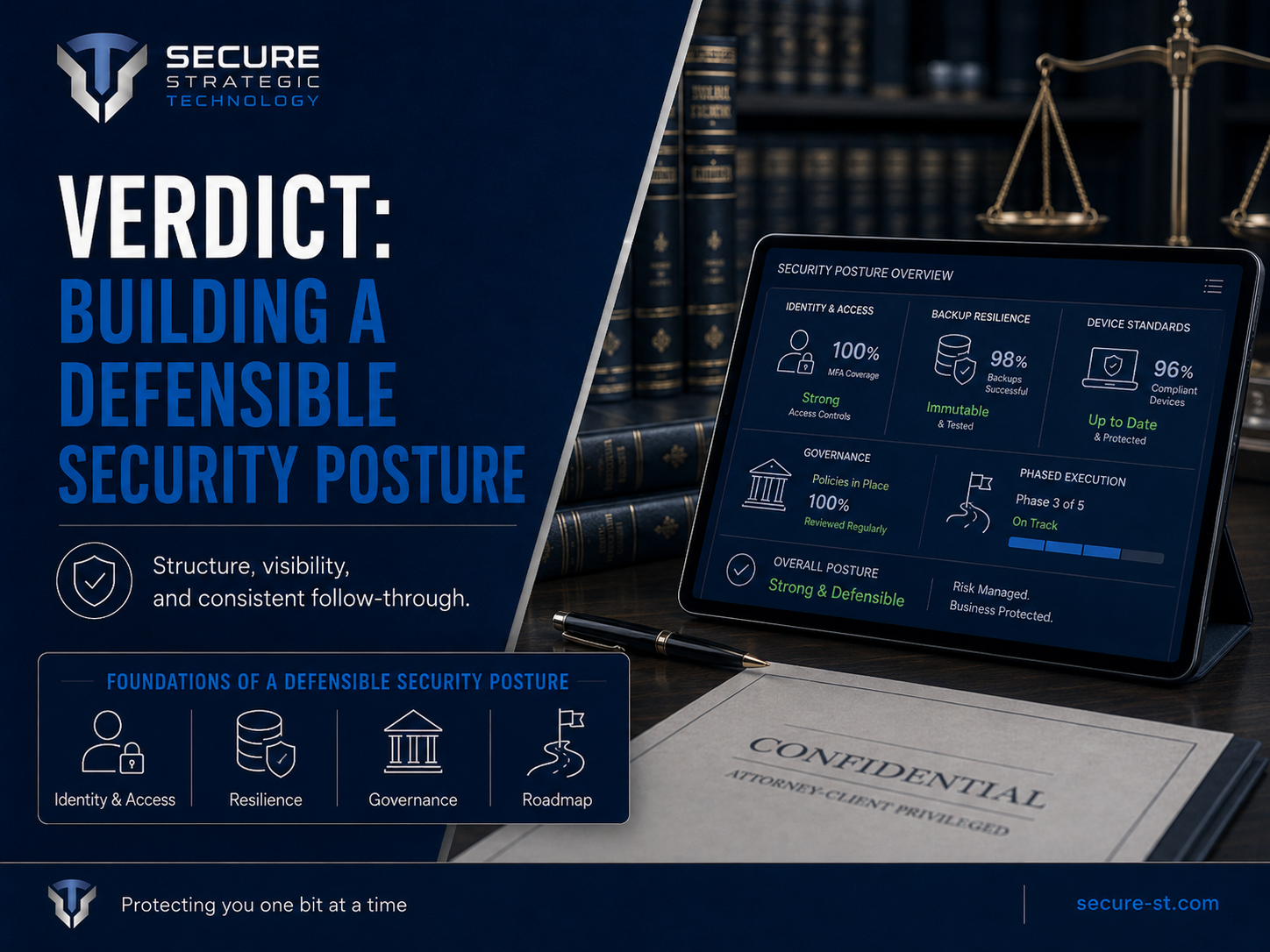
By the time a law firm asks whether its security posture is defensible, leadership is usually looking for more than a list of tools. The real question is whether the firm can confidently explain how it protects client information, supports continuity, and reduces preventable risk. A defensible posture is not about perfection. It is about structure, visibility, and consistent follow-through.
That distinction matters. Many firms have invested in technology over time. They may already have endpoint protection, email security, cloud applications, backups, and awareness training in place. But a collection of tools does not automatically create a program that leadership can defend. If access is inconsistent, backups are untested, policies are loosely enforced, and progress is not reviewed on a regular cadence, the posture may still be difficult to explain to clients, insurers, or internal stakeholders.
A defensible posture starts with identity and access control. In a law firm, people need fast access to data, communications, and case materials. That need does not diminish the need for discipline. Firms should know who has access to what, which accounts have elevated rights, how multi-factor authentication is enforced, and how access changes are reviewed as roles shift. These steps are foundational because they reduce the likelihood of misuse and improve accountability when something does happen.
The next layer is resilience. Law firms cannot treat backup as a box-checking exercise. A defensible posture includes protected backups, clear retention practices, and routine restore validation. Leadership should be able to answer practical questions: What data is protected? How quickly can it be restored? What happens if a cloud sync issue, a ransomware event, or a user error affects data? The value of backup is proven in recovery, not in the existence of a dashboard.
Device and system standards are the foundation for everything else to be consistent. When devices are managed, remote access is controlled, and core applications are reviewed, the environment stops working against itself and begins supporting a posture leadership can defend.
Governance is where many firms either strengthen or weaken their position. Security cannot live only in the IT conversation. Leadership needs ongoing visibility into priorities, gaps, and progress. That does not mean drowning partners in technical detail. It means translating security into business language: client confidentiality, uptime, insurability, operational predictability, and accountability. Regular review sessions help firms move from scattered activity to managed improvement. They also make it easier to show that security decisions are deliberate rather than reactive.
Another important part of defensibility is phased execution. Firms do not need to solve everything at once. In fact, trying to overhaul every control at once often creates fatigue and inconsistency. A stronger approach is to set priorities, assign ownership, and follow a roadmap. Start with identity, privileged access, backup confidence, and endpoint standards. Then expand into deeper validation, policy refinement, vendor access review, and ongoing governance. Measurable progress is more credible than broad intent.
This is especially relevant when firms face client questionnaires, insurance renewals, or due diligence requests. Those moments are not just compliance exercises. They are stress tests of how well the firm understands its environment. A defensible posture makes those conversations cleaner because leadership can point to defined safeguards, documented reviews, and a clear operating process. Even when the firm is still improving, it can show that risk is being addressed with discipline.
The verdict is straightforward. Better security for a law firm is not about chasing every new threat narrative. It is about building an environment that leadership can explain and defend under scrutiny. When access is controlled, recovery is validated, standards are enforced, and progress is regularly reviewed, the firm becomes more resilient and more credible. That is what a defensible posture looks like. It protects the firm’s operations, strengthens client trust, and gives leadership a clearer path forward than reactive security ever can.