November Is the Last Practical Window to Fix Busy Season IT Gaps
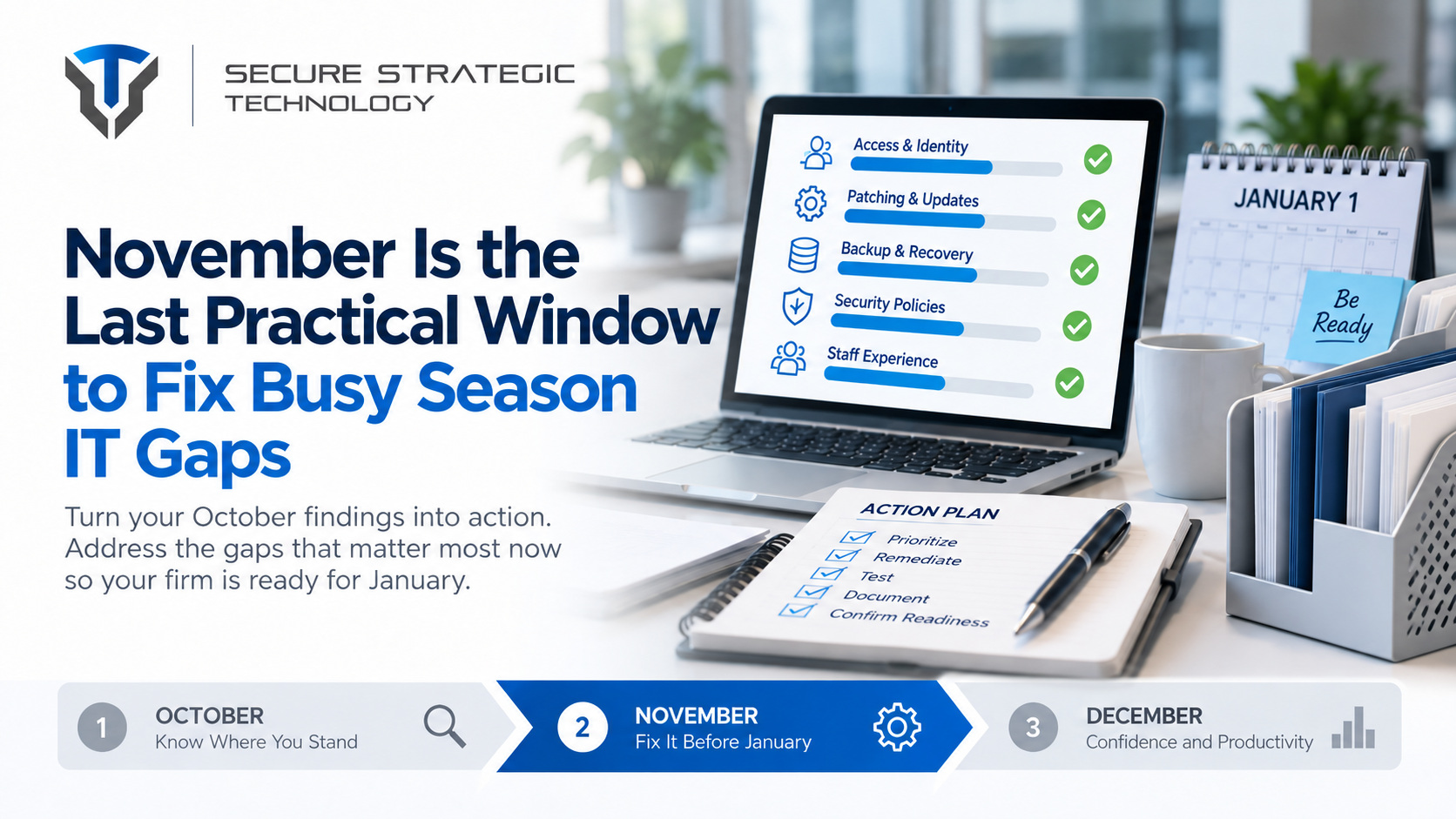
By November, accounting firms should have enough information to know where the biggest technology risks are. The next question is whether those findings will be acted on before January.
November matters because it is the last practical window for focused remediation. Once peak season begins, the appetite for change drops quickly. Firms need stability. Staff need predictable systems. Leadership wants fewer variables, not new ones.
That does not mean November should become a month of broad technology projects. The objective is narrower: fix the gaps most likely to create downtime, access problems, recovery uncertainty, or repeated staff interruption.
Start with identity and access.
If October showed inconsistent multi-factor authentication, stale accounts, excessive privileges, shared credentials, or uncontrolled vendor access, those issues should be addressed first. Access changes are often manageable when they are planned and tested. They become much harder to tackle in the middle of peak workload.
Next, confirm patch and update discipline. Operating systems and critical applications should follow a defined cycle, with exceptions identified and reviewed. Unsupported or aging systems should be visible to leadership. If a major update is required, November provides time to schedule it, validate it, and address side effects before the firm enters its busiest period.
Backup and recovery should receive the same level of attention. A backup strategy is only useful if the firm can recover what it needs. Review the scope of protected systems and cloud data. Confirm that backup failures are monitored. Validate recovery where appropriate. Make sure responsibilities are clear if a critical system becomes unavailable.
This is also a good time to refresh the written information security plan and related procedures. A WISP should reflect the current environment, current responsibilities, and the controls the firm actually uses. The document should help leadership understand how information is protected and who is responsible for key actions, not simply exist as a file that is rarely reviewed.
Then address the recurring IT annoyances that staff have learned to live with.
Slow logins, unreliable remote connections, repeated printing issues, application delays, and recurring device problems can consume attention throughout the year. During busy season, those same problems become more costly because interruptions break concentration and take time away from client work.
The key is prioritization.
A useful November remediation list should be short enough to execute and important enough to matter. Focus first on issues that could stop work, prevent recovery, weaken access control, or repeatedly interrupt staff. Document each change. Test the result. Keep leadership informed about what is complete and what remains open.
Just as important, know when not to make a change.
November is not the time to introduce unnecessary complexity. Some improvements can wait until after busy season. A disciplined plan separates must-fix readiness items from projects that are valuable but not urgent.
By the end of the month, leadership should be able to answer five questions: What did we fix? What remains open? What did we test? Who owns the remaining items? What should stay unchanged during peak season?
SST’s managed-service approach emphasizes proactive maintenance, cybersecurity, strategic planning, and disciplined process. That framework helps organizations make targeted progress without turning remediation into uncontrolled change.
November’s message is straightforward: fix what matters before January.
The payoff comes in December, when the focus shifts from making changes to confirming readiness.